Wednesday, April 8, 2015

HOW TO INSTALL MTK DRIVER USING CMD – PROBLEM SOLVED


I have been struggling to unbrick Alcatel One Touch 918, for three days but only got it right on the fourth day. It's been quite tiresome as my time having been wasted only to realize the wrongly installed drivers on my computer.
Here is the step by step procedure on how to go about it:
Start menu, type cmd in search programs and files
  1. cmd.exe will appear in the programs list right-click on cmd.exe and choose Run as Administrator
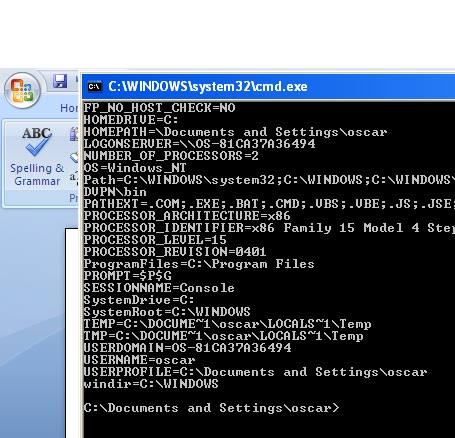
  2. In the command session type set devmgr_show_nonpresent_devices=1 and press enter
  3. In the command session type devmgmt.msc and press enter
  4. The Device Manager console will appear
  5. In Device Manager click on View and choose Show Hidden Devices
  6. If there is list entry Ports (COM & LPT) expand it and note the following change
  7. If there is an entry MediaTek PreLoader USB VCOM Port (COMn) then the driver is already installed
  8. Right click on the entry and choose Uninstall
  9. The uninstall dialogue box appears
  10. Check Delete the driver software for this device and click OK
  11. The MediaTek device will be uninstalled
  12. If this was the ONLY port listed, the list entry Ports (COM & LPT) will also disappear (DON'T PANIC)
  13. Ensure your CUBE is POWERED OFF (wait for vibration to show it is completely off)
  14. Attach the powered off cube to the computer via USB
  15. The computer will start to install the drivers, but will probably report Device Driver software was not successfully installed.
  16. Click on the balloon message and a message box will say MT65xx Preloader No Driver Found
  17. Return to the Device Manager
  18. There should be a list entry Other Devices - expand it.
    1. Find the child list entry MT65xx Preloader
    2. Right click and choose Update Software Driver...
    3. Update Driver Software dialogue is displayed
    4. Choose Browse my computer for driver software
    5. In the Browse for driver software dialogue click browse and navigate to the download location where you extracted the ROM's zip file content.
    6. Navigate to the sub-folder containing the *.inf files.
    7. Click Next
    8. Windows may prompt saying Windows can't verify the publish of this driver software
      1. Choose Install this driver software anyway
    9. ​Windows should say Installing Driver Software
    10. Windows will then say Windows has finished installing the driver software for this device: MediaTek PreLoader USB VCOM Port
    11. Unplug and replug the CUBE
    12. Windows will start installing the driver instance
      1. Sometimes the install will fail
      2. Click the balloon message and message box will say Install failed - device unplugged
      3. Unplug and replug the CUBE and things should be OK
  19. Return to the Device Manager
  20. There should now be a list entry Ports (COM & LPT)
  21. Expand this item and it should contain MediaTek PreLoader USB VCOM Port (COMn)
Be patient sine everything will go well. Don’t lose that precious phone of yours opting to buy a new one. No.
Bless!

Tuesday, April 7, 2015

WRITING YOUR PROJECT DOCUMENTATION IN APA FORMAT


What is APA format?
APA style is a format for academic documents such as journal articles and books. It is generally advised to be used in most writings or in our institutions.
Here are step by step procedures on how to go about it:
Title of Paper Goes Here And I Will Also Add Here the Unnecessary Words APA Format Sixth Edition Template So the Document Will Come Up in Searches
Paul Rose
Southern Illinois University Edwards ville


Author Note
A brief author note (which should not be included in papers submitted in Paul Rose’s classes) goes here. It may include acknowledgment of funding sources, expressions of gratitude to research assistants and contact information for the author who will handle requests. I have a few notes of my own to share here. First, I am very grateful to everyone who has emailed me with suggested improvements; I’m sorry I can’t acknowledge you all here. Second, you are hereby granted permission to use this document for learning and research purposes. You may not sell this document either by itself or in combination with other products or services. Third, if you use this document, you use it at your own risk. The document’s accuracy and safety have been thoroughly evaluated, but they are not guaranteed. Fourth, if you find this document helpful, I don’t want your money, but I would be grateful if you would click on this URL: http://goo.gl/DGHoZ. It directs to a harmless Department of Psychology web page at SIUE, but what is more important is that it records click-through data that give me an idea of how many people have found this document helpful. Thanks!


An abstract is a single paragraph, without indentation, that summarizes the key points of the manuscript in 150 to 250 words.  For simpler papers in Paul Rose’s classes, a somewhat shorter abstract is fine.  The purpose of the abstract is to provide the reader with a brief overview of the paper. When in doubt about a rule, check the sixth edition APA manual rather than relying on this template.  (I prefer only one space after a period, but two spaces are suggested by the sixth-edition APA manual at the top of page 88.)  This document has a history that compels me to give credit where it’s due. Many years ago I downloaded a fifth-edition template from an unspecified author’s web site at Northcentral University. I modified the template extensively and repeatedly for my own purposes and in the early years I shared my highly-modified templates only with my own students. By now, I have edited this document so many times in so many ways that the current template bears virtually no similarity to the old Northcentral document. I want to be clear, however, that I am in debt to an unknown author who spared me the inconvenience of having to create my own templates from scratch.
Keywords: writing, template, sixth, edition, APA format, self-discipline, is, good
Title of Paper Gets Repeated Here Exactly As It Appears On Title Page
This is where the body of your paper begins. Note that the title of your paper appears at the top of your introduction even though other sections begin with headings like “Method”, “Results” and so on.  The rest of the text in this template provides hints about properly generating the parts of your APA-formatted paper.  Notice that there is no extra spacing between the paragraphs or sections.
The major components of your paper (abstract, body, references, etc.) each begin on a new page. These components begin with centered headings at the top of the first page.  (You can see how major components of text get divided in this freely available sample document: http://www.apastyle.org/manual/related/sample-experiment-paper-1.pdf ).  Some papers have multiple studies in them so the body could have multiple sections and subsections within it.
Sections can have subsections with headings.  For example, a Method section might have Participants, Materials, and Procedure subsections.  The sixth of the APA manual, unlike earlier editions, tells you to bold headings (but not the title above or anything on the title page). Below are examples.

  • Heading Level 1

  • Heading Level 2
  • Heading level 3. (Note the indent and period, and note how the capitalization works. You will probably never go deeper than the third heading level.) 
  • Heading level 4.
  • Heading level 5.

Citations and References


Check your assigned reading materials for rules about citations (which occur within the text of the paper) and references (which are listed in their own separate section at the end of the paper).  Remember that you can find a lot of answers to formatting questions with a careful online search.  When you’re looking at information online, you may want to consider where the information is coming from, whether the information might refer to an older edition of APA format and whether other online sources agree with the information you’ve found.  When in doubt, follow the latest edition of the APA manual.

About a References Section

An example of a References section is on the next page.  Take note of the "hanging indent" style and double-spacing (with no extra spacing between references).  The easiest way to create hanging indents is to type your references without worrying about indentation and when you are finished, select all the references at once and apply the hanging indents using the ruler at the top.
Many APA format rules are not mentioned or demonstrated in this document. You should plan to spend a lot of time looking up formatting rules, just like your professors do when they write papers. If APA formatting is driving you crazy and you want a distraction, how about alleviating people’s suffering with a simple click? Check out The Hunger Site (http://www.thehungersite.com/).


References

Ajournalarticle, R. H., Spud, P. T., & Psychologist, R. M. (2002). Title of journal article goes here. Journal of Research in Personality, 22,236-252. doi: 10.1016/0032-026X.56.6.895*
B’Onlinesourcesareconfusing, S. O. (2010). Search for answers at apastyle.org and include issue numbers after volume numbers when there is no DOI. Journal of Articles Without Digital Object Identifyers, 127 (3) , 816-826.
Cmagazinearticle, B. E. (1999, July). Note the last names on this page: Each source type has to be formatted in a different way. [Special issue]. Prose Magazine, 126 (5), 96-134.
Dbookreference, S. M., Orman, T. P., & Carey, R. (1967). Google scholar’s “cite” feature is usually accurate and time-saving. New York: Dawkins-Harris Publishing.
O’encyclopedia, S. E. (1993). Words. In The new encyclopedia Britannica (vol. 38, pp. 745-758). Chicago: Forty-One Publishing.
Pchapter, P. R., & Inaneditedvolume, J. C. (2001). Scientific research papers. In P. Z.  Wildlifeconservation, R. Cirk, & J. H. Dennett (Eds.), Research papers are hard work but boy are they good for you (pp. 123-256). New York: Lucerne Publishing.
Qosenberg, Morris. (1994, September 11). This is how you cite an online news article that has an author. The Washington Post. Retrieved from http://www.washingtonpost.com/dir/subdir/2014/05/11/a-d9-11e3_story.html
* On p. 189, the 6th ed. manual says “We recommend that when DOIs are available, you include them”—so you can skip the DOI if you can’t find it. Footnotes like this aren’t appropriate in a real references section.


Footnotes

1 Some professional journals ask authors to avoid using footnotes.  In an undergraduate paper they are almost never necessary.
2 As of 2013, I do not recommend using the footnote and end note features in Word if you want to keep your footnotes in APA format.

 Hope this was a helpful tutorial. Much love1

Thursday, April 2, 2015

4 REASONS YOU SHOULD START BLOGGING WHILE AT SCHOOL


A simple 4 reasons approach as to why you should start blogging while still a school.
  Hello and welcome back again, my name is Oscar. Imagine you are student who is currently taking a course at the university, and you want to build an amazing blog. This is your time, no one can stop you.
Blogging is while still at school is not a quite easy task as you may think. Especially when you are balancing blogging with your school work. The most important perspective view we consider most is your capability to deliver mostly good promising works. Works that can be read and appreciated by many people. Blogging at school seems to be a bit little hard as many can think as those who prefer blogging at home. But from our African setup, you realize that you don’t have much time to blog when you at at home. Most of the time you are busy. The only time you have to gain is when you are a bit tiresome and you feel not only for your brain but also your hands are too exhausted to write anything meaningful that you can post.
At school you got far much time to do extras. The environment of an institution is far much good to do you your own works. It is only when you get caught up with lots of school works including exams. This day i am going to tell you some for good steps to consider when blogging at school.

1. Availability of Computers

Most institutions or colleges are equipped with computer labs. This is where the favor lies within you. It’s when you got to devote yourself and the advantage of the precious cool computers sleeping vacant with no one to use them. Again, most of the institutions now days are well equipped with modern libraries, every student got right to use the same libraries for learning. If truly you can cheep in, and punch in you stuffs then you may be on top of the game definitely.

2. Awesome learning resources

You feel really good when you want to explode what you know. Guilty gets into you when you don’t know anything on how to do something. You need to equip your mind in order to do all these things. In school, starting from you friends to any other thing are the resources you need. You are forced to learn new things since these are the first places where the ‘Dot-com Effects begin to manifest. You get to learn just from the environment itself. You have got you mentors right in place, these are you teachers who can show you the direction we are heading to without paying magic.

3. My net, my life.

To define, internet is the large connection of networks worldwide. We can simply say, MTANDAO NI BABA YAO’, meaning, ‘the internet is their father. This clarifies the whole thing as absolutely true. There  are many things we can self-learn from internet absolutely by ourselves, not to forget what i am doing right now. Almost all schools in Various African countries is well equipped with free internet nowadays. In fact this is a great marketing tool for private institutions. Look at various guides on how you will spend you time on using the precious commodity like this. Discover your goals and move towards our destiny by using the vast knowledge from the internet.

4. Stop wasting time on social media!

Attention! This is a commandment you should obey.
Have you considered yourself going professional?
It is a high time you should critically caress between the lines and start viewing yourself professional. Has Facebook become mad and infringed you that you cannot unlock yourself out of it, listen, this post i wrote last time on how to survive without Facebook might help you.
 If Facebook friends have become thread to you and you cannot stop clicking one profile to another, consider getting a Facebook page with the current total number of friends as your  likes like this one.

It is you to transform now, no one else will. If you have got question or any other suggestion, consider leaving your comment below this post

Sunday, March 29, 2015

How To install the SNMP service in wndows

What Is SNMP?
 From technet, the Simple Network Management Protocol (SNMP) is a popular protocol for network management. It is used for collecting information from, and configuring, network devices, such as servers, printers, hubs, switches, and routers on an Internet Protocol (IP) network. Microsoft Windows Server 2003 provides SNMP agent software that works with third-party SNMP management software to monitor the status of managed devices and applications.
Automating Network Management
Large networks with hundreds or thousands of nodes are difficult to manage without a large staff to monitor every computer. SNMP, which is widely used in local area networks (LANs), lets you monitor network nodes from a management host. You can monitor network devices such as servers, workstations, printers, routers, bridges, and hubs, as well as services such as Dynamic Host Configuration Protocol (DHCP) or Windows Internet Name Service (WINS).
Use SNMP management software to monitor any network device on which you install SNMP agent software. The SNMP agent, which is an optional component of Windows Server 2003, interacts with third-party SNMP management software to enable the sharing of network status information between monitored devices and applications and the SNMP management system that monitors them. The following figure shows this process.
Computer Running SNMP Manager Requests Status Information from Devices Running SNMP Agent.

i   Installing the SNMP service:
1.
Open Windows Components wizard
2.
In Components, click Management and Monitoring Tools (but do not select or clear its check box), and then click Details.
3.
Select the Simple Network Management Protocol check box, and click OK.
4.
Click Next.
Note
•To open the Windows Components Wizard, click Start, click Control Panel, click Add or Remove Programs, and then click Add/Remove Windows Components. 
•Certain Windows components require configuration before they can be used. If you installed one or more of these components but did not configure them, when you click Add/Remove Windows Components, a list of components that need to be configured is displayed. To start the Windows Components Wizard, click Components. 
•You must be logged on as an administrator or a member of the Administrators group in order to complete this procedure. If your computer is connected to a network, network policy settings may also prevent you from completing this procedure. 
•SNMP starts automatically after installation. Credit: Microsoft


Saturday, March 21, 2015

HOW TO USE KCB M-PESA ACCOUNT WITH YOUR PHONE


KCB M-PESA Account
KCB M-PESA is a savings account that enables you to access instant loans up to Kshs.1M upon dialing *844# in Kenya.
“The KCB M-PESA Account features include:

  • Minimum saving of Kshs.1 and maximum saving of Kshs.1M
  • Personal accident insurance benefit based on savings
  • Interest on savings of 2% p.a.
You may load your savings easily and conveniently via M-PESA, KCB Mobi, Mtaani agent and/or branch and withdraw your KCB M-PESA account savings only via M-PESA.
How you can Access Loans?
You can borrow instantly without saving with disbursement being to KCB M-PESA Account Loan Limits (Kshs.100 to Kshs.500,000 with a top up option)
You can choose flexible repayment periods of 1 month, 3 months and 6 months via M-PESA, KCB M-PESA Account and Mobi/Branch/Mtaani with an option of Partial payments.
The interest on the loan include:
  • 30 day loan at 4% per month (4%)
  • 90 day loan at 3% per month (9%)
  • 180 day loan at 2% per month (12%)
The KCB M-PESA Account Fixed Deposit accounts
There are two types of fixed deposit accounts available to you as a KCB M-PESA Account holder. They include
  • Fixed Savings Account
  • Target Savings Account
Fixed Savings Account
This Account allows you to lock a specific amount of cash for a certain period of time.
How does it work?
  • You will not be able to top-up to the amount saved.
  • Locked periods include 1, 3, 6, and 12 months with minimum amount of Kshs.500.
  • Upon early or premature redemption, you will forfeit all interest accrued.
  • You get cash back immediately to KCB M-PESA account on prompting cash back
  • You also get Life insurance benefit based on fixed deposit savings.
Target Savings Account
This account allows you to set a target and make deposits towards achieving that target.
How does it work?
  • You will top up continuously until you achieve your target.
  • The account is accessible with standing orders from M-PESA or KCB M-PESA Account
  • You can choose from target periods of 1, 3, 6 and 12 months with minimum contribution of Kshs.50.
  • You will also earn interest on cumulative interest
  • You are allowed up to 4 withdrawals within target lock period to maintain interest.
  • You will get cash back immediately to your KCB M-PESA account on prompting cash back
  • You benefit from exciting Interest rates of 1 month (3%), 3 months (4%), 6 months (5%) and 12 months (6%)”
Source: Safaricom Kenya.
 For further information, you can read KCB M-PESA Account Terms and Conditions on Safaricom website.

Wednesday, March 4, 2015

WHAT KENYA HAS DONE IN THE HONOUR OF WANGARI MATHAI

Who is Professor Wangari Mathai?

Wangari Maathai was the founder of the Green Belt Movement and the 2004 Nobel Peace Prize Laureate. She authored four books: The Green Belt Movement; Unbowed: A Memoir; The Challenge for Africa; and Replenishing the Earth. As well as having been featured in a number of books, she and the Green Belt Movement were the subject of a documentary film, Taking Root: the Vision of Wangari Maathai (Marlboro Productions, 2008).

Wangari Muta Maathai was born in Nyeri, a rural area of Kenya (Africa), in 1940. She obtained a degree in Biological Sciences from Mount St. Scholastica College in Atchison, Kansas (1964), a Master of Science degree from the University of Pittsburgh (1966), and pursued doctoral studies in Germany and the University of Nairobi, before obtaining a Ph.D. (1971) from the University of Nairobi, where she also taught veterinary anatomy. The first woman in East and Central Africa to earn a doctorate degree, Professor Maathai became chair of the Department of Veterinary Anatomy and an associate professor in 1976 and 1977 respectively. In both cases, she was the first woman to attain those positions in the region.

Professor Maathai was active in the National Council of Women of Kenya (1976–1987) and was its chairman (1981–1987). In 1976, while she was serving in the National Council of Women, Professor Maathai introduced the idea of community-based tree planting. She continued to develop this idea into a broad-based grassroots organisation, the Green Belt Movement (GBM), whose main focus is poverty reduction and environmental conservation through tree planting.

Professor Maathai was internationally acknowledged for her struggle for democracy, human rights, and environmental conservation, and served on the board of many organisations. She addressed the UN on a number of occasions and spoke on behalf of women at special sessions of the General Assembly during the five-year review of the Earth Summit. She served on the Commission for Global Governance and the Commission on the Future.

Professor Maathai represented the Tetu constituency in Kenya’s parliament (2002–2007), and served as Assistant Minister for Environment and Natural Resources in Kenya’s ninth parliament (2003–2007). In 2005, she was appointed Goodwill Ambassador to the Congo Basin Forest Ecosystem by the eleven Heads of State in the Congo region. The following year, 2006, she founded the Nobel Women’s Initiative with her sister laureates Jody Williams, Shirin Ebadi, Rigoberta Menchú Tum, Betty Williams, and Mairead Corrigan. In 2007, Professor Maathai was invited to be co-chair of the Congo Basin Fund, an initiative by the British and the Norwegian governments to help protect the Congo forests.

In recognition of her deep commitment to the environment, the United Nations (UN) Secretary-General named Professor Maathai a UN Messenger of Peace in December 2009, with a focus on the environment and climate change. In 2010 she was appointed to the Millennium Development Goals Advocacy Group: a panel of political leaders, business people and activists established with the aim to galvanize worldwide support for the achievement of the Millennium Development Goals (MDGs). Also in 2010, Professor Maathai became a trustee of the Karura Forest Environmental Education Trust, established to safeguard the public land for whose protection she had fought for almost twenty years. That same year, in partnership with the University of Nairobi, she founded the Wangari Maathai Institute for Peace and Environmental Studies (WMI). The WMI will bring together academic research—e.g. in land use, forestry, agriculture, resource-based conflicts, and peace studies—with the Green Belt Movement approach and members of the organization.

Professor Maathai died on 25 September 2011 at the age of 71 after a battle with ovarian cancer. Memorial ceremonies were held in Kenya, New York, San Francisco, and London.

Website: www.greenbeltmovement.org

What has the goverment of Kenya done during her day?

Always remember to live the world a better place than you found it
African Environment Da y. Conserve the environment -WangariMaathai.
</br> Wangari Maathai (1940-2011) was the founder of the Green Belt
Movement and the 2004 Nobel Peace Prize Laureate. She authored four
books: The Green Belt Movement; Unbowed: A Memoir; The Challenge for
Africa; and Replenishing the Earth. As well as having been featured in
a number of books, she and the Green Belt Movement were the subject of
a documentary film, Taking Root: the Vision of Wangari Maathai
(Marlboro Productions, 2008).
Wangari Muta Maathai was born in Nyeri, a rural area of Kenya
(Africa), in 1940. She obtained a degree in Biological Sciences from
Mount St. Scholastica College in Atchison, Kansas (1964), a Master of
Science degree from the University of Pittsburgh (1966), and pursued
doctoral studies in Germany and the University of Nairobi, before
obtaining a Ph.D. (1971) from the University of Nairobi, where she
also taught veterinary anatomy. The first woman in East and Central
Africa to earn a doctorate degree, Professor Maathai became chair of
the Department of Veterinary Anatomy and an associate professor in
1976 and 1977 respectively. In both cases, she was the first woman to
attain those positions in the region.
Kenya burnt 15 tonnes of ivory on Tuesday and promised to destroy all
of its stockpile this year, the latest step in its campaign against
elephant poaching.
The ceremony was to mark the African Union-designated Wangari Maathai
Day, in honor of the late environmentalist and Nobel Peace Prize
Laureate, and the World Wildlife Day.
Kenya has imposed stiffer penalties -- longer jail terms and bigger
fines -- for wildlife poaching or trafficking, saying poaching is
harming tourism, a major earner of foreign exchange.
</br> Global Eco-Warrior Wangari Maathai Celebrated indeed.

10 INSPIRATIONAL QUOTES FROM WANGARI MATHAI

Phenomenal woman she is. We can refer her to as WOMAN OF STEEL or
WOMAN OF SUBSTANCE.
From the 7 women who changed the world, we get to learn from a Political activist Dr. Wangari Maathai founded the Green Belt Movement in the 1970s.

"When we plant trees, we plant the seeds of peace and hope," said 2004 Nobel Peace Prize winning environmentalist Wangari Maathai.

The Kenyan political activist founded the Green Belt Movement in 1977 in an effort to empower rural women who had started reporting their streams were drying up, their food supply was less secure, and they had to walk further than ever before for firewood.

The movement has since spread across the world, campaigning on climate change and teaming up with the United Nations Environment Programme.

Africa celebrates Africa Environment Day and life of #WangariMaathai.
Below are some of her best quotes In celebration of
‪#InternationalWomensDay ‬on March 8:
1. "There are opportunities even in the most difficult moments,"

2. Your voice matters
3. "It's the little things citizens do. My little thing is planting trees."
4. Its the little things that we do that make the difference
5. I'm doing the best I can." That I can't & will never forget
6. Until you dig a hole, you plant a tree, you
water it and make it survive, you haven't
done a thing. You are just talking.~
7. "We are called to assist the Earth, to heal her wounds and in the
process heal our own — indeed to embrace the whole of creation in all
its diversity, beauty, and wonder."
8. "When we plant trees, we plant the seeds of peace and hope."
9. All of us have a God in us, and that God is the spirit that unites
all life, everything that is on this planet.
10. "Finally I was able to see that if I had a contribution I wanted
to make, I must do it, despite what others said. That I was okay the
way I was. That it was all right to be strong."

THE 1ST AFRICAN WOMAN TO WIN A NOBEL PRIZE
Wangari Maathai from the Republic of Kenya was the first African
woman, and the first environmentalist, to win a Nobel Peace Prize.She
had been nicknamed 'Mother of Tree.
Kenya burnt a stockpile of 15 tonnes of elephant tusks in honour of ‪WorldWildlifeDay‬ and ‪#‎WangariMaathaiDay2015‬. President Uhuru Kenyatta, First Lady Margaret Kenyatta visited the Green Belt Movement display to mark this special day.
Truly a great woman. Your work
lives on!